

industrial design

The "Smart Interface" War

Who Owns the “Swipe”? The GUI Design Battle

Who Owns the “Swipe”? The GUI Design Battle back to blog The “Smart Interface” War  In the physical world, an industrial design protects a chair or a bottle. But in 2025, the most valuable real estate isn’t physical—it’s the screen on your wrist, your dashboard, or your fridge. In October 2025, a massive legal battle between a Silicon Valley tech giant and a budget smartwatch maker settled a burning question: “Can you own a digital animation?” The answer is Yes, and it changes how every software company needs to think about IP. The Story: The lawsuit focused on the Graphical User Interface (GUI) of a smartwatch. The plaintiff (the Tech Giant) had registered the transition animation of their menu—specifically, the way the icons “bounced” and “faded” when a user swiped left. The defendant (the Budget Maker) argued that animations are software, not “Industrial Designs,” and should be covered by Copyright (which is harder to enforce). The court disagreed, citing the 2025 EU Design Reform and similar updates in Singapore and Japan. The updated laws now explicitly define “Design” to include “movement, transition, or any other sort of animation.” The court found that the Budget Maker had infringed the design not by copying the code, but by copying the “Look and Feel” of the movement. It didn’t matter that the code was different; the visual experience was protected property. The “Elongated” Lesson: This ruling creates a new asset class: Virtual Design. GUIs are the new frontier: If you are designing an app, a game, or a smart device, your “User Experience” (UX) is now a registered asset. You can protect the layout of your buttons, the shape of your icons, and the flow of your screens. The “Static” Trap: Old design registrations only showed static screenshots. This ruling confirms that static drawings are useless for protecting dynamic interfaces. You must now file MP4 files or “sequence drawings” to protect the movement. How ASEAN IPR Helps: Most companies in Southeast Asia are still filing “static” design applications. They are leaving their best assets unprotected. Dynamic Design Filings: We specialize in filing GUI Designs in Singapore, Thailand, and Vietnam. We know exactly how to format the “sequence views” required to protect your animations. Virtual Product Protection: Are you selling digital items (skins, furniture) in the Metaverse or games? We register these as virtual industrial designs, ensuring you can sue copycats even inside a virtual world. UX Audits: We review your app interface to identify which unique elements (swipe gestures, loading animations) are eligible for monopoly protection. Protect Your Digital Experience Other Articles David vs. Goliath in Pandora: Did Hollywood Steal “Avatar”? • December 18, 2025 • copyright David vs. Goliath in Pandora: Did Hollywood Steal “Avatar”? back to blog The “Avatar” Theft Accusation Imagine spending years building a universe—sketching … The Day the Music Stopped for AI: German Court Crushes OpenAI’s “Training” Defense • December 10, 2025 • copyright The Day the Music Stopped for AI: German Court Crushes OpenAI’s “Training” Defense back to blog The AI “Black Box” Defense is … November 2025: Can an AI Own a Brand? The Ruling That Changed Everything • December 18, 2025 • trademark Can an AI Own a Brand? The Ruling That Changed Everything back to blog The “AI-Generated” Trademark Trap Imagine you spend six … October 2025: The Day Adidas Lost Its Stripes in London • December 9, 2025 • trademark this is the news for trademark blog section for the October month 2025

Who Owns the “Swipe”? The GUI Design Battle Read More »
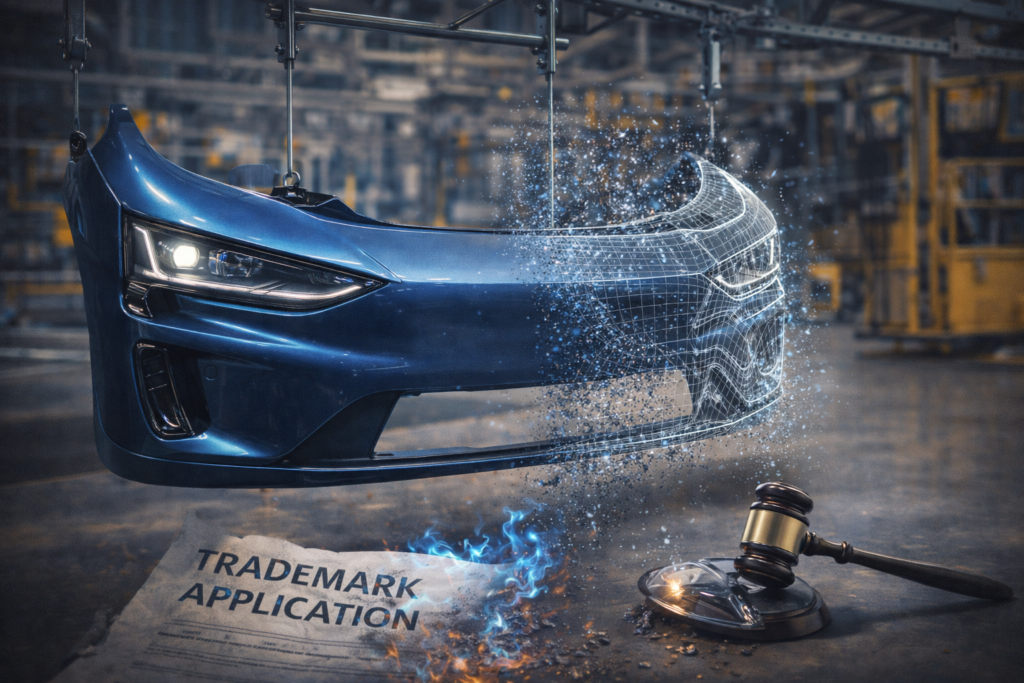
The Billion-Dollar Bumper Case That Changed Repair Rights

The Billion-Dollar Bumper Case That Changed Repair Rights

The Billion-Dollar Bumper Case That Changed Repair Rights back to blog The “Must Match” Verdict For decades, car manufacturers have held a monopoly on “visible” spare parts. If you smashed your headlight or dented your fender, you had to buy the replacement from the original manufacturer (OEM) because they owned the Industrial Design of that specific shape. They argued that because the part must match the car’s body, no one else was allowed to make it. But in November 2025, that monopoly was officially dismantled. A landmark ruling in Europe, following the full implementation of the 2025 Design Directive, has declared that “Must Match” parts are fair game. The Story: The dispute involved a major German luxury automaker and an independent Italian spare parts manufacturer. The automaker sued the Italian company for selling “replica” bumpers and hoods that fit their latest EV model. They argued that these parts infringed on their registered Community Designs. However, the defense hinged on the newly enforced “Repair Clause” (Article 20a). The court ruled that because these parts were used solely for the purpose of repairing a “complex product” (the car) to restore its “original appearance,” the design protection was unenforceable. The judge’s verdict was stinging: “A design right is meant to reward creativity, not to hold consumers hostage to a single supplier for repairs.” This ruling (delivered November 14, 2025) effectively stripped design protection from billions of dollars worth of inventory—specifically hoods, fenders, lights, and grilles—opening the floodgates for third-party manufacturers. The “Elongated” Lesson: This isn’t just a European issue; it’s a global supply chain earthquake. ASEAN is the world’s factory for auto parts (especially Thailand and Vietnam). For OEMs: Your design strategy is now broken. You can no longer rely on design patents to block aftermarket competitors. You must pivot to protecting “distinctive” accessories (like spoilers or specialized rims) that aren’t strictly “must match.” For Manufacturers: The green light is on. If you are a Thai or Vietnamese factory, you can now legally manufacture and export these parts to the EU, provided you label them correctly as non-OEM. How ASEAN IPR Helps: The line between a “Repair Part” (legal to copy) and an “Accessory” (illegal to copy) is blurry. Freedom-to-Operate (FTO) Opinions: We analyze your spare parts catalog to tell you exactly which parts can be legally manufactured and exported under the new 2025 rules. Design Validity Challenges: If you are blocked by a competitor’s design registration, we use this new precedent to invalidate their rights and clear the market for your products. Export Compliance: We ensure your aftermarket parts meet the strict “origin labeling” requirements so they don’t get seized by Customs as counterfeits. Unlock the Aftermarket Opportunity Other Articles The Day the Music Stopped for AI: German Court Crushes OpenAI’s “Training” Defense • December 10, 2025 • copyright The Day the Music Stopped for AI: German Court Crushes OpenAI’s “Training” Defense back to blog The AI “Black Box” Defense is … David vs. Goliath in Pandora: Did Hollywood Steal “Avatar”? • December 18, 2025 • copyright David vs. Goliath in Pandora: Did Hollywood Steal “Avatar”? back to blog The “Avatar” Theft Accusation Imagine spending years building a universe—sketching … November 2025: Can an AI Own a Brand? The Ruling That Changed Everything • December 18, 2025 • trademark Can an AI Own a Brand? The Ruling That Changed Everything back to blog The “AI-Generated” Trademark Trap Imagine you spend six … October 2025: The Day Adidas Lost Its Stripes in London • December 9, 2025 • trademark this is the news for trademark blog section for the October month 2025

The Billion-Dollar Bumper Case That Changed Repair Rights Read More »